City Tech 101: The Ultimate Guide to AI & Web3 Cities
City tech is redefining urban development. Discover how AI and Web3 create smarter, sustainable cities for planners and innovators.

In this article17 sections · 23 min read
- 01The City Tech Inflection Point: When AI Meets Web3
- 02City Tech and AI: The Cognitive Engine Powering Self-Learning Cities
- 03Web3 and Blockchain: Building Decentralized Trust in Urban Infrastructure
- 04Quantum Computing: Solving Urban Problems Too Complex for Classical Computers
- 05IoT: Creating the Sentient City’s Nervous System
- 06Edge vs. Cloud: Architecting Real-Time Urban Intelligence
- 07Next-Gen Connectivity: When 5G and Beyond Unlock Urban Innovation
- 08Mobility Reimagined: How Transportation Tech Will Reshape Urban Life
- 09Powering Smart Cities: The Clean Energy Revolution
- 10Robotics and Automation: The Silent Workforce Transforming Urban Services
- 11Biotech in the City: Merging Biology with Urban Ecosystems
- 12Immersive Urban Living: AR and VR’s Role in Future City Experiences
- 13EdTech for Urban Futures: Preparing Citizens for Tomorrow’s Jobs
- 14The Ethics of Urban Tech: Balancing Innovation with Public Good
- 15Securing the Smart City: Cybersecurity in an AI-Web3 World
- 16Frequently Asked Questions
- 17Building People-First Cities: A Call to Action for Urban Leaders

Updated
This post is also available in Español, Deutsch, 日本語 and Português.
The City Tech Inflection Point: When AI Meets Web3
Your city’s traffic is gridlocked. Its water systems leak millions of gallons yearly. Crime prediction relies on hunches and historical data. And when a pothole appears, it takes weeks to report and fix. Meanwhile, decisions about millions in infrastructure spending get made in conference rooms with incomplete information and competing interests. City tech, the combination of AI, Web3 and connected infrastructure, is how that starts to change.
This is the reality facing urban planners and municipal leaders right now. Smart cities promised to solve these problems, and they’ve delivered some wins, but they’ve mostly just made cities incrementally more efficient. What they haven’t done is fundamentally reimagine what’s possible.
Here’s what I’ve noticed after a decade tracking how technology actually changes cities: we’ve been thinking too small. We’ve bolted sensors onto existing systems and called it innovation. But the real transformation isn’t coming from smarter versions of what we already have. It’s coming from three converging forces: AI that learns and adapts in real time, Web3 technologies that restore trust and citizen control, and computational approaches that can solve problems we’ve always considered too complex to crack.
I’m not talking about theoretical future stuff. This is happening now, and the cities that understand these shifts will thrive. The ones that don’t will find themselves obsolete faster than they expect.
So what’s actually changing? AI isn’t just processing data anymore, it’s becoming the cognitive engine that lets cities learn and respond to their citizens’ needs. Web3 is creating new ways for people to participate in their cities’ futures instead of being passive subjects of top-down governance. Quantum computing is opening doors to solving urban challenges that classical computers can’t touch. And the choice between edge and cloud computing isn’t just technical anymore, it’s reshaping how cities balance speed, security, and citizen privacy.
But here’s the catch: moving faster doesn’t mean moving recklessly. The same technologies that make cities smarter also make them more vulnerable. Getting this right means thinking seriously about ethics, cybersecurity, and who actually benefits from these systems.
Let’s walk through what’s really happening beneath the hype.
City Tech and AI: The Cognitive Engine Powering Self-Learning Cities

Credit: Teresa Wang / Pexels
Imagine a city that learns and adapts on its own, constantly optimizing its infrastructure and services to better serve its inhabitants. This isn’t a distant dream, it’s the reality of self-learning cities powered by AI. These cognitive engines are transforming urban landscapes into intelligent ecosystems that anticipate needs, reduce waste, and enhance quality of life.
- Predictive Maintenance: AI algorithms analyze data from sensors embedded in infrastructure to predict when maintenance is needed, reducing downtime and costs.
- Smart Traffic Management: Machine learning models optimize traffic flow, reducing congestion and improving air quality by dynamically adjusting traffic signals based on real-time data.
- Energy Efficiency: AI-driven systems monitor energy usage in buildings and adjust heating, cooling, and lighting to minimize waste and lower carbon footprints.
- Public Safety: Advanced AI can analyze crime data to identify patterns and allocate resources more effectively, making cities safer for everyone.
- Citizen Engagement: AI-powered chatbots and virtual assistants provide instant information and support, enhancing the relationship between citizens and their city.
As cities become smarter through AI, the next frontier is ensuring trust and transparency in these systems. This is where Web3 and Blockchain come into play, building decentralized trust in urban infrastructure.
Web3 and Blockchain: Building Decentralized Trust in Urban Infrastructure
Imagine a city where every transaction, every service, and every interaction is transparent, secure, and efficient. This vision is becoming a reality through the integration of Web3 and blockchain technologies into urban infrastructure. These innovations are not just buzzwords, they’re the building blocks of a future where trust is decentralized and embedded into the very fabric of our cities.
Key Concepts:
- Decentralized Trust: Blockchain technology eliminates the need for intermediaries by creating a transparent and immutable ledger. This means that transactions in urban services like energy distribution, transportation, and even voting can be verified without relying on a central authority.
- Smart Contracts: These self-executing contracts with the terms directly written into code can automate processes, reducing human error and increasing efficiency. For example, smart contracts can manage utility payments, ensuring that services are only paid for when they’re actually used.
- Data Security: With blockchain, data is encrypted and distributed across a network of computers, making it nearly impossible to hack. This enhances the security of sensitive information in urban systems, from personal health records to city planning data.
- Community Engagement: Web3 platforms enable direct participation from citizens in decision-making processes. Through decentralized applications (dApps), residents can vote on local issues, propose new projects, and collaborate on community initiatives.
As we look ahead, the potential of Web3 and blockchain to transform urban infrastructure is immense. But there’s another emerging technology that could take this transformation to the next level, quantum computing. This powerful tool has the potential to solve urban problems that are too complex for classical computers, opening up new possibilities for efficiency, sustainability, and innovation in our cities.
Quantum Computing: Solving Urban Problems Too Complex for Classical Computers
Quantum computing holds the promise of solving urban problems that are far too complex for classical computers. Imagine a city where traffic congestion is a thing of the past, energy is efficiently distributed, and pollution is minimized. This future is within reach thanks to the power of quantum computing.
Key Concepts:
- Traffic Optimization: Quantum algorithms can process vast amounts of data to optimize traffic flow in real-time, reducing congestion and travel time.
- Energy Management: Quantum computing can enhance the efficiency of energy grids, predicting demand and optimizing distribution to minimize waste and reduce costs.
- Pollution Control: By analyzing complex environmental data, quantum computers can identify patterns and suggest effective strategies to reduce pollution and improve air quality.
- Infrastructure Planning: Quantum computing can simulate urban development scenarios to inform better infrastructure planning, ensuring sustainable growth.
As we harness the power of quantum computing to tackle these challenges, we’re not just improving cities, we’re building smarter, more sustainable environments. And as we look ahead, the integration of the Internet of Things (IoT) will further enhance our ability to create sentient cities, where every component is interconnected and responsive.
IoT: Creating the Sentient City’s Nervous System

Credit: Jakub Zerdzicki / Pexels
The Internet of Things (IoT) is transforming cities into living organisms, with interconnected devices acting as the nervous system that enables real-time communication and data exchange. This technology is not just a futuristic concept, it’s already enhancing urban life by making cities smarter, more efficient, and more responsive to the needs of their inhabitants. As we explore how IoT is creating the sentient city’s nervous system, we’ll see how it’s paving the way for the next wave of innovation in urban intelligence.
Key Concepts:
- Smart Infrastructure: IoT devices embedded in roads, buildings, and public spaces gather data on traffic patterns, energy usage, and environmental conditions, enabling cities to optimize resources and reduce waste.
- Real-Time Data Processing: By leveraging IoT, cities can process data instantaneously, allowing for immediate responses to issues like traffic congestion or utility outages, improving overall quality of life.
- Enhanced Public Services: IoT enables more efficient public services, from waste management to emergency response, by providing actionable insights that help city officials make informed decisions.
- Citizen Engagement: IoT platforms can empower citizens to participate in city management by providing them with real-time information and tools to report issues or suggest improvements.
As cities become more sentient through IoT, the next critical step is to architect the systems that will support real-time urban intelligence. This brings us to the debate between edge computing and cloud computing, each offering unique advantages for processing and analyzing the vast amounts of data generated by a sentient city.
Edge vs. Cloud: Architecting Real-Time Urban Intelligence
| Feature | Edge Computing | Cloud Computing |
|---|---|---|
| Latency | Under 10ms, processed locally | 50ms to 150ms, remote transit |
| Bandwidth Cost | Low backhaul, minimal transfer | High ingestion, ongoing data fees |
| Data Sovereignty | Sensitive data remains local | Data moves to external data centers |
| Scalability | Hardware constrained, node limits | Virtually unlimited on demand |
| Compute Power | Limited by local device specs | Massive centralized GPU and CPU pools |
| Offline Resilience | Functions during network outages | Requires constant connectivity |
| Primary Use Cases | Autonomous traffic, emergency alerts | Historical analytics, model training |
- Latency Winner: Edge. It’s the only choice when milliseconds matter for traffic safety or emergency response.
- Scalability Winner: Cloud. You’ll get far more storage and compute for citywide AI model training.
- Key Takeaway: Most smart city deployments use both. Edge handles realtime action, while the cloud handles heavy analytics.
Knowing these differences helps frame the next section, covering next generation connectivity and how 5G and beyond power urban innovation.
Next-Gen Connectivity: When 5G and Beyond Unlock Urban Innovation
The future of cities isn’t being drafted in boardrooms. It’s being built on invisible highways of data that move faster than our morning caffeine kicks in. Once you realize that tomorrow’s urban breakthroughs depend less on concrete and more on constant, seamless conversation between machines, you’ll start seeing street corners as something far more alive.
- Ultra-low latency turns technical specs into public safety. When networks shrink delay to nearly nothing, urban AI can finally step out of the lab and onto the curb without second-guessing itself.
- A single square kilometer could soon host millions of connected devices without breaking a sweat. Street sensors, air quality monitors, and wearable health trackers will chat simultaneously, painting a live portrait of city health we’ve simply never had before.
- Edge computing pushes brainpower closer to the action. Instead of shipping raw data across the country, neighborhoods get localized processing. That means faster decisions, stronger privacy, and less strain on backbone infrastructure.
- Decentralized connectivity is where Web3 gets genuinely exciting. Communities could own slices of their own networks through peer to peer infrastructure, letting neighborhoods vote on bandwidth priorities with transparent governance instead of waiting on a distant telecom boardroom.
- The digital twin concept finally gets the real time fuel it deserves. A virtual copy of the city, fed by constant sensor streams, lets planners test disaster responses or energy loads before touching a single physical road.
All of this speed and awareness sets the stage for something you can physically feel. Once the city itself becomes a responsive organism, the way we actually move through it won’t stay the same. The very networks that let buildings talk and grids balance themselves are about to change our relationship with pavement, distance, and time.
Mobility Reimagined: How Transportation Tech Will Reshape Urban Life
Credit: Noval Gani / Pexels
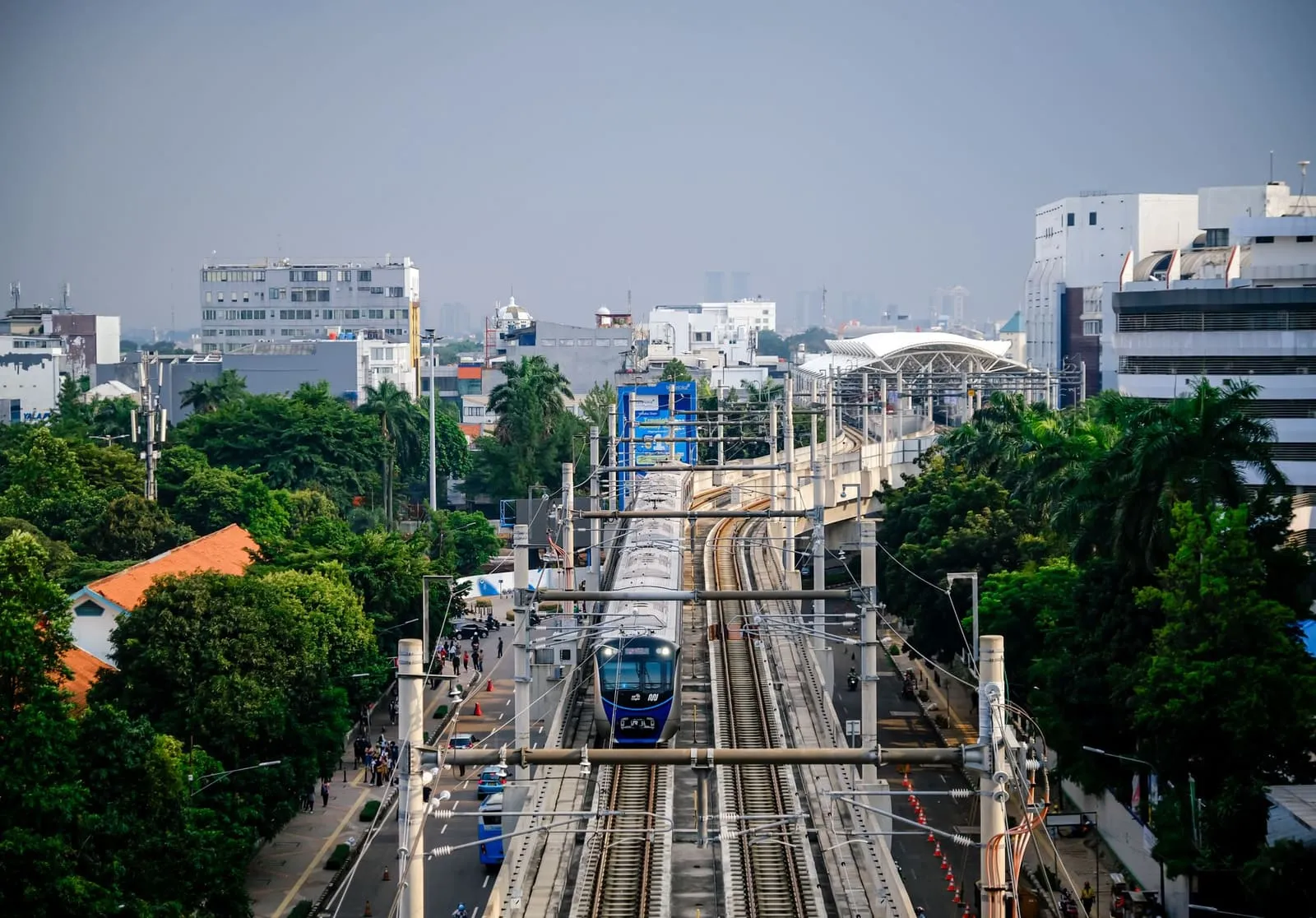
Your morning commute is about to become unrecognizable. Between AI copilots, autonomous fleets, and tokenized transit networks, we’re moving toward a future where getting around feels less like a daily grind and more like a seamless service. If your coffee stays hot because the car handled the traffic, you’re already seeing the first hints of that shift.
- Autonomous fleets will turn parking garages into community spaces. When cars drop you off and keep moving instead of sitting idle, cities reclaim huge amounts of real estate that used to be wasted on empty vehicles.
- Picture hailing an electric air taxi from a downtown rooftop. Urban air mobility is quickly leaving the drawing board, and it’ll redefine “crosstown” once you’re gliding above the gridlock instead of crawling through it.
- Micromobility networks are filling the gaps that trains and buses can’t reach. Shared e-bikes and scooters, orchestrated by AI, solve the last mile without adding another car to the road.
- Your transit app is becoming a universal wallet. Blockchain-powered Mobility-as-a-Service lets you pay for subways, rideshares, and e-scooters through one digital identity, cutting friction and giving riders real ownership over their data.
- Traffic lights that actually think. Adaptive infrastructure guided by computer vision adjusts signal patterns on the fly, so ambulances and buses aren’t stuck waiting while an intersection sits empty.
None of this works without the right fuel behind it. These smarter vehicles and connected networks demand an energy backbone that’s as clean as the traffic patterns are efficient. Once you rethink how a city moves, you’ll immediately run into the question of what actually powers it.
Powering Smart Cities: The Clean Energy Revolution
Cities are waking up to a reality where clean energy isn’t a far off ideal, but the actual backbone of modern urban life. We’re seeing grids get smarter, buildings turn into power plants, and sunlight become genuine infrastructure. The momentum here is about building cities that run cleaner, cheaper, and with fewer bottlenecks than models built on fossil fuels.
- Distributed energy networks are flipping the old top down model. Instead of one massive plant powering millions, neighborhoods now share rooftop solar, local battery storage, and peer to peer trading platforms. This means your apartment building might sell excess power to the brewery down the street during peak hours.
- Microgrids and AI driven load balancing keep the lights on when storms or heat waves strain traditional infrastructure. These systems predict demand spikes before they happen, automatically routing power where it’s needed most. It’s resilience through intelligence, not just brute force capacity.
- Green building integration has moved beyond solar panels slapped on roofs. We’re talking about windows that harvest light, walls that store thermal energy, and HVAC systems that learn your habits. The building itself becomes a living battery that breathes with the city around it.
- Urban planners are rethinking mobility through the lens of vehicle to grid technology. Electric buses and cars don’t just draw power, they feed it back during shortages. A parked EV fleet turns into the city’s largest distributed battery bank.
As these energy systems grow more sophisticated, the physical work of maintaining them becomes harder to ignore. Someone, or something, has to inspect those solar arrays, manage those battery warehouses, and repair infrastructure spread across millions of square miles. The next wave of urban evolution won’t only flow through wires and wattage. It’ll move through mechanical hands working quietly behind the curtain.
Robotics and Automation: The Silent Workforce Transforming Urban Services
Cities run on rhythm, and increasingly, that rhythm is being kept by machines that neither sleep nor sip coffee. From underground maintenance tunnels to rooftop logistics hubs, a silent workforce of robots and automated systems is stitching urban life together with quiet precision. What we’re witnessing isn’t a takeover, but a collaboration where steel and circuitry handle the grind so human creativity can focus elsewhere.
-
Autonomous logistics are gliding through campuses and downtown corridors, delivering parcels and meals without adding vehicles to traffic. These rolling and flying couriers learn routes in real time, turning the chaotic last mile into a smooth algorithmic flow.
-
Predictive maintenance bots crawl through sewer lines, scale bridge cables, and inspect power grids while the city sleeps. They spot fractures and leaks long before a human crew could, which means fewer surprise sinkholes and more reliable commutes.
-
Automated sorting centers handle the dirty work of urban sanitation. Robotic arms guided by computer vision separate recyclables with precision, removing humans from hazardous repetitive tasks and freeing up waste teams for community programs.
-
Municipal back offices are shedding their paper mountains as software automation handles permit approvals, ticket routing, and data entry. Staff who once drowned in admin work now have space to focus on actual problem solving.
As this mechanical workforce settles into the background hum of city life, we’re starting to see urban innovation through a wider lens. The conversation is shifting from purely synthetic systems toward something far more elemental. Tomorrow’s infrastructure won’t just be built and programmed. It will be grown.
Biotech in the City: Merging Biology with Urban Ecosystems

Credit: Tima Miroshnichenko / Pexels
The future of our cities isn’t just digital infrastructure and smart sensors. It’s also growing, breathing, and alive. Biotech is stepping out of sterile labs and into the streets, parks, and buildings where we live, creating urban ecosystems that work with nature rather than against it.
- Living architecture is already here. Buildings wrapped in photosynthetic facades pull carbon from the air while keeping interiors cool. Algae bioreactors integrated into glass panels generate energy and oxygen, turning skyscrapers into vertical forests that actually contribute to air quality instead of degrading it. These aren’t concept sketches anymore, they’re operational prototypes in cities from Hamburg to Bangkok.
- Engineered organisms are becoming the new public works crew. Researchers have developed bacteria that can heal concrete cracks by producing limestone when exposed to water, extending the lifespan of infrastructure by decades. Fungi networks are being tested as natural filtration systems for urban runoff, breaking down pollutants before they reach water supplies. Even street lighting is getting a biological upgrade, with bioluminescent trees under development that could one day replace electric streetlamps.
- Synthetic biology labs are partnering with city planners to tackle waste in entirely new ways. Microbes designed to break down specific plastics are being integrated into waste management systems. Urban farms are using precision fermentation to produce protein, reducing the need for long supply chains and the emissions that come with them. The gap between what we throw away and what we can regenerate is shrinking fast.
- Air quality monitoring is going microscale and biological. Cities are deploying moss walls and lichen sensors that change color based on pollution levels, giving residents real-time feedback about the air they’re breathing. These systems don’t just measure, they actively scrub toxins while providing data that helps city officials respond faster to environmental threats.
What makes this transformation stick is that it’s tangible. You can see a green wall cleaning the air, touch the algae panel on your building’s facade, walk through a park where engineered plants are quietly filtering groundwater. But as powerful as these biological interventions are, they still exist in a physical realm we experience through our traditional senses. The next layer of urban transformation happens when we augment those senses entirely, blending the physical city with layers of digital information that reshape how we navigate, work, and connect with the spaces around us.
Immersive Urban Living: AR and VR’s Role in Future City Experiences
If you’re reading this with a fresh cup nearby, you’re already in the right headspace. Our cities are about to get a serious software update, and augmented and virtual reality are becoming the invisible infrastructure that shapes how we move, work, and connect downtown. If you think your morning commute is predictable now, wait until digital layers start talking to the physical streets.
-
Spatial computing will turn every street corner into an interface. Instead of staring at your phone, you’ll receive ambient directions projected through lightweight glasses, showing transit times and hazards in your field of view without breaking your stride.
-
Digital twins give urban planners superpowers. City officials can simulate traffic flow, energy grids, or disaster scenarios in virtual replicas before pouring a single dollar into concrete, which means fewer headaches for everyone involved.
-
The line between remote work and physical offices is blurring fast. Mixed reality coworking hubs could let someone in Tokyo share a virtual desk with a teammate in Berlin while sitting in a park in Brooklyn. Presence becomes something you dial in, not something you’re stuck with.
-
Public art and history won’t be limited to museums. Imagine walking past a building and seeing its 1920s facade layered over the modern glass exterior, or watching a historical event replay on the actual sidewalk where it happened. That’s contextual storytelling baked right into the infrastructure.
-
First responders and maintenance crews will rely on live data overlays. Firefighters could see floor plans and heat signatures in real time, while technicians pull up schematics hovering over the pipes they’re fixing.
All of this tech is moving fast, but here’s the catch. None of these immersive tools matter if the people living in these cities can’t build, maintain, or program them. We’re looking at a future where the fabric of daily life is part code and part concrete, which means the skills required to thrive downtown are shifting underneath our feet. Before we get too lost in the spectacle of holographic street signs and virtual offices, we need to ask who’s actually being trained to create them.
EdTech for Urban Futures: Preparing Citizens for Tomorrow’s Jobs
Coffee in hand, I keep coming back to the same question: how do cities train workers for jobs that don’t exist yet? Education isn’t keeping up with the speed of urban change, and that’s where EdTech steps in. By merging AI tutors, immersive simulations, and blockchain credentialing, cities can turn street corners and subway rides into classrooms, building minds that adapt as fast as the job market shifts.
-
Adaptive learning pathways powered by AI can meet workers where they are, not where a syllabus thinks they should be. A single parent between shifts doesn’t need four years of campus life to pivot into cybersecurity. They need targeted modules that respond to what they’ve already mastered and skip what they haven’t.
-
Rather than forcing learners into rigid semesters, immersive simulations turn urban infrastructure into live teaching tools. Plumbing, electrical grids, and logistics networks become case studies through augmented reality, letting learners troubleshoot real problems before they ever touch a physical worksite.
-
Cities get better results when they treat transit hubs and coworking spaces as campus extensions. Microlearning environments tucked into libraries, coffee shops, and metro stations fit daily routines instead of fighting them.
-
On the credentialing side, Web3 is quietly rebuilding trust in informal education. When certificates live on verifiable ledgers instead of paper transcripts, employers can instantly confirm a candidate’s skills, and workers can carry their proof of learning across borders, platforms, and careers.
-
At its core, this is about human creativity, the layer no algorithm replaces. The best urban EdTech doesn’t teach people to compete with machines. It teaches them to direct, question, and collaborate with the tools reshaping their streets.
All of this promise depends on who gets a seat at the table. If algorithms shape curriculums without oversight, or if credentialing systems exclude those without reliable internet, cities risk hardening the very inequalities they’re trying to solve. Tomorrow’s classrooms will run on code, but they still serve humans, and that tension between progress and protection is exactly where the conversation turns next.
The Ethics of Urban Tech: Balancing Innovation with Public Good
Our sidewalks are filling with sensors, our traffic lights are learning to think, and our utilities are running on code. It’s an exhilarating moment for urban life, but progress without purpose risks building cities that serve spreadsheets instead of people. The real challenge isn’t whether we can innovate, but whether we’ll innovate with intention.
- Data dignity must sit at the center of every smart city blueprint. Citizens aren’t data reservoirs; they’re stakeholders who deserve clear answers about what gets collected and why.
- Algorithmic transparency keeps trust alive. When AI decides who receives public benefits or which neighborhoods get priority for repairs, the logic behind those choices can’t hide inside a black box. The NIST AI Risk Management Framework offers a practical starting point for managing those risks.
- Equitable access demands that the same IoT infrastructure lighting up a downtown corridor also connect overlooked communities. A smart city is only as strong as its most neglected block.
- Decentralized governance offers a promising path forward. Web3 tools like community tokens and transparent ledgers give residents a verifiable voice in budget and planning decisions without waiting on slow bureaucracy.
- Privacy by design, not privacy as an afterthought. Cameras and sensors should collect the minimum necessary signal rather than harvesting maximum surveillance.
Here’s where the coffee really kicks in. Ethical urban tech doesn’t require us to slow down. It asks us to steer with clearer purpose. Every sensor we install and every line of code we deploy carries a value judgment, and when we honor that responsibility, we don’t just create efficiencies. We earn something far more valuable, which is public trust. Yet that trust depends on stability. The same interconnected systems that manage our energy grids, traffic flows, and citizen services are drawing attention from threats we can’t afford to overlook.
Securing the Smart City: Cybersecurity in an AI-Web3 World
The future of urban living runs on code, and that code needs a serious security upgrade. As AI manages traffic grids and Web3 protocols decentralize city data, we’re building smarter infrastructure but also wider attack surfaces. Here’s how the next generation of cybersecurity is rising to meet the moment.
-
Autonomous threat detection lets AI anticipate attacks rather than simply react to them, spotting anomalies across citywide sensor networks before a human analyst finishes their first cup of coffee.
-
By putting decentralized identity in the hands of residents, cities can reduce the damage of single point data breaches. Citizens control their credentials, and services verify without ever hoarding sensitive personal information on one fragile server.
-
Immutable audit trails on distributed ledgers give city administrators a transparent record of every firmware update, access request, and financial transaction across smart infrastructure. When accountability matters, logs that resist tampering replace blind trust with cryptographic proof.
-
Resilience at the edge pushes security closer to where data originates, whether that’s a traffic camera or a water sensor. Processing and encrypting information locally limits exposure, so a compromised node doesn’t bring down the whole grid.
-
Collective defense networks allow cities to share encrypted threat intelligence through Web3 protocols, turning isolated municipalities into a unified ecosystem. When one city stops a novel attack, every connected urban center becomes instantly harder to breach.
The shift toward intelligent, interconnected cities isn’t slowing down, and neither are the threats targeting them. The same technologies powering urban evolution also give us the tools to protect it. If you’re wondering how these changes affect your commute, your privacy, or the streetlights on your block, you’re asking exactly the right questions. Let’s look at what’s on everyone’s mind.
Frequently Asked Questions
What Is Emerging Technology and Why Does It Matter for Cities?
Emerging technology refers to innovations like artificial intelligence, blockchain, Internet of Things, and advanced data analytics that are reshaping how cities operate, deliver services, and engage residents. These technologies matter for cities because they enable smarter infrastructure, more efficient resource management, transparent governance through Web3 solutions, and create pathways for citizens to participate directly in urban ecosystems in ways previously impossible.
Which Four Technologies Are Most Critical for Urban Transformation?
Artificial Intelligence for intelligent resource optimization, blockchain and Web3 for transparent governance and decentralized services, Internet of Things sensors for real-time urban monitoring, and renewable energy systems form the foundation of next-generation cities. Together, these technologies enable municipalities to reduce operational costs by up to 30 percent, improve public services through data-driven decision making, and create more resilient infrastructure that adapts to citizen needs in real time.
What Are the Top 10 Emerging Technologies Shaping 2026 and Beyond?
The ten technologies reshaping urban landscapes include artificial intelligence for smart infrastructure management, Web3 decentralized systems for transparent governance, Internet of Things sensors for real-time city data, quantum computing for complex urban planning, edge computing for faster local processing, autonomous vehicles for reimagined transportation, renewable energy grids integrated with battery storage, 5G and 6G networks enabling connected cities, digital twins creating virtual city simulations, and augmented reality tools for citizen engagement and urban design visualization. These innovations converge to create smarter, more resilient, and more inclusive cities that respond dynamically to resident needs while reducing environmental impact.
What Are the 5 Latest Breakthrough Technologies for Smart Cities?
The five latest breakthrough technologies reshaping smart cities are: AI-powered traffic management systems that reduce congestion through real-time predictive analytics, IoT sensor networks that monitor air quality and energy consumption across entire urban infrastructure, blockchain-based municipal governance systems enabling transparent resource allocation and citizen participation, edge computing platforms that process data locally for faster response times in critical services, and autonomous mobility solutions including self-driving buses and delivery robots that optimize last-mile logistics. Together, these technologies create interconnected urban ecosystems that respond dynamically to citizen needs while reducing operational costs and environmental impact.
How Will AI and Web3 Actually Work Together in Urban Environments?
AI handles the real-time analysis and decision-making of urban systems like traffic flow, energy distribution, and resource allocation, while Web3’s decentralized networks enable transparent, secure ownership and control of urban data and services without reliance on centralized intermediaries. Together, they create a feedback loop where AI learns from distributed data sources to optimize city operations, and blockchain records ensure that citizens, municipalities, and service providers can verify decisions, track resource allocation, and participate in governance with complete transparency.
What Are the Biggest Challenges Cities Face When Implementing These Technologies?
Cities encounter three critical barriers: massive infrastructure costs and legacy system integration, as aging urban systems rarely align with modern AI and blockchain architectures; governance and regulatory gaps, since most municipal frameworks haven’t established clear standards for decentralized systems and data ownership; and widespread digital literacy constraints, where both city officials and residents lack familiarity with these emerging technologies, slowing adoption and public trust. Additionally, cybersecurity vulnerabilities increase significantly when transitioning to decentralized networks, requiring new expertise that many municipalities don’t currently possess.
How Can Municipal Leaders Prepare Their Cities for This Technological Convergence?
Municipal leaders should start by establishing cross-functional governance frameworks that integrate AI and Web3 expertise into city planning departments, creating clear policies around data ownership, digital identity, and blockchain-based governance systems before implementation begins. They’ll need to invest in workforce training and digital infrastructure upgrades, partner with technology vendors and academic institutions for pilot projects, and prioritize transparent communication with residents about how these technologies improve services like transportation, utilities, and public records. Finally, cities must adopt modular, interoperable technology standards rather than proprietary solutions, ensuring that today’s investments remain adaptable as these technologies evolve.
Building People-First Cities: A Call to Action for Urban Leaders
The fusion of artificial intelligence and Web3 isn’t a distant blueprint for future generations. It’s an active toolkit for anyone ready to reshape civic life today. When you combine predictive intelligence with decentralized, transparent governance, you move away from top-down urban management and toward truly responsive, citizen-owned communities. Technology stops being an end in itself and becomes the invisible engine driving equity, resilience, and genuine human connection.
Here’s how you can turn these concepts into concrete momentum right now:
- Pilot a localized AI data loop. Identify one friction point in your district, like public transit delays or waste management, and deploy open source AI models to analyze real-time usage. Share that data publicly so local entrepreneurs can build hyper-relevant solutions.
- Test decentralized civic engagement. Introduce a Web3 token or quadratic voting system for a small participatory budget project. You’ll give residents a direct, tamper-proof voice in how municipal funds get spent in their neighborhoods.
- Form a cross-sector working group. Bring together local technologists, urban planners, and community advocates once a month. You’ll break down institutional silos and ensure tech implementations serve actual human needs rather than tech vendor promises.
The future of your city isn’t something that happens to you, so pick one project and start building today.
Discuss online
Found this useful? Share it with your network or start a conversation.